
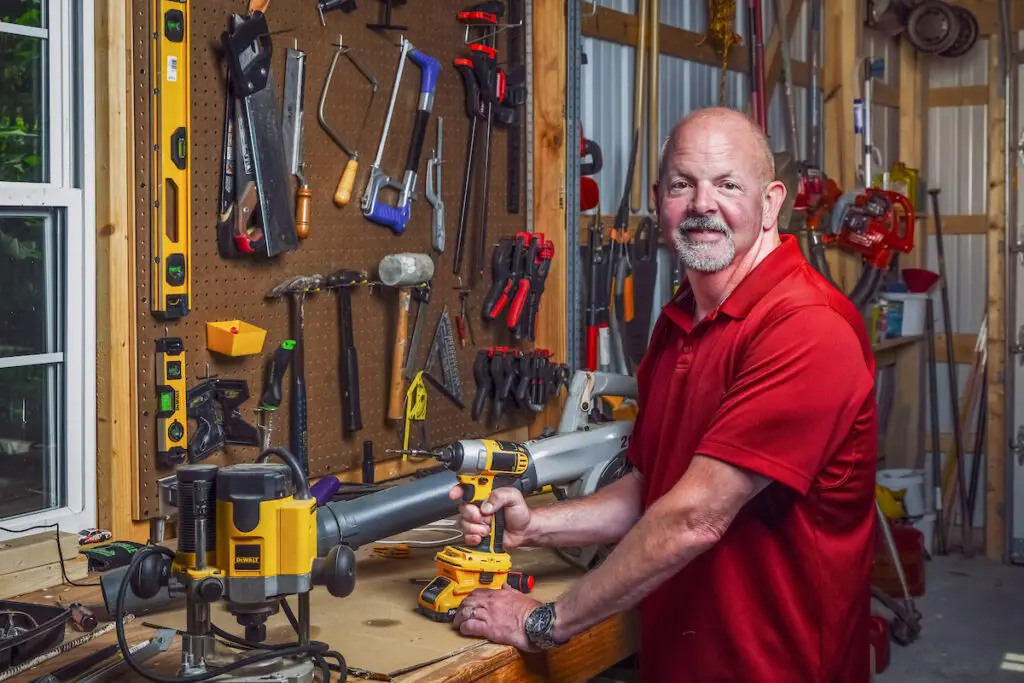
Doug Evans, a 55-year-old Jarrettsville resident, believed his lifestyle was fairly healthy. He quit smoking, enjoyed nutritious home-cooked meals lovingly prepared by his wife, Kristen, and was active with work and household chores.
This perspective shifted dramatically when he experienced a cardiac emergency in early 2025. Thanks to the lifesaving interventions of the Emergency Department (ED) and cardiac catheterization teams at UM Upper Chesapeake Health (UM UCH), as well as ongoing care from the therapists in cardiac rehabilitation, Evans was given a new lease on life, leading to a profound reevaluation of his health and happiness.
Speed When Every Second Counts
Besides a few bumps and bruises, Evans was fortunate enough to avoid the ED for most of his life. Growing up in greater Baltimore, he was also skeptical of community hospitals. That all changed in February, when he began experiencing chest tightness at home while packing for a trip to Ocean City.
Kristen, 51, a primary care practice manager and personal trainer, was quick to recognize his symptoms as a heart attack. Reluctant to worry his neighbors with an ambulance, Evans asked his wife to drive him directly to UM Upper Chesapeake Medical Center (UM UCMC) Bel Air’s ED.
There, his condition was immediately assessed by a team of medical professionals, including interventional cardiologist Michael Drossner, MD. “They did an EKG and rushed me back into a room, gave me nitroglycerin, and just started everything,” Evans said. While in the ED, Evans’ heart stopped twice.
One of his arteries was completely blocked, also known as a chronic total occlusion. “At that point, I’m crying,” Kristen said. “I thought I was losing my husband just two weeks after losing my mom.”
Second Chances

The emergency team revived him each time, and Evans was quickly taken to the Cardiac Catheterization Lab. Dr. Drossner and his team swiftly addressed the issue with a small mesh tube, called a stent, placed to open Evan’s blocked artery.
The procedure, coupled with chest compressions in the ED, saved his life. Evans was resuscitated without any permanent damage, and the stent procedure was successful.
“Within four hours, I was standing next to him talking to him, and he asked if he could go home,” Kristen said. “It’s just the incredible number of people who not only acted professionally but also really cared. They were just so supportive of the severity of the situation while acting so quickly.”
Movement Is Progress
UM UCH is continuously looking for ways to improve outcomes for patients, according to Lisa Thomas, MD, chair of Emergency Medicine at UM UCH. Last year, UM Upper Chesapeake Medical Center Bel Air implemented a new workflow model called the Rapid Assessment Zone (RAZ). This model aimed to optimize patient flow and improve efficiency in the ED.
So far, the results have been promising, based on both data and firsthand success stories. “RAZ has transformed the ability to connect patients more quickly with doctors and improve their experience when they visit the ED,” Dr. Thomas said. “Most will get to see a doctor in under one hour.”
The Road to Recovery
After a day in the Intensive Care Unit and three days in inpatient care, Evans was discharged from the hospital. He had several weeks of rehab and rest ahead, but was otherwise cleared to resume his regular activities.
“Cardiac Rehabilitation at [UM UCMC] Bel Air was amazing. It is such a great program,” Evans said. “You could tell the enthusiasm of the people who were there.”
So, what’s next for Evans? Simply put, he wants to enjoy living in the present. After his health scare, Evans returned home to Kristen and their two French bulldogs, Fiona and Cleopatra, with this fresh outlook on life.
“Don’t sweat the small stuff,” he said. “Enjoy yourself and enjoy the people you’re with while they’re all here.”
Finding Their Oasis

As a Department of Defense employee at Aberdeen Proving Ground and a retired Air Force Chief Master Sergeant, Evans has been fortunate enough to travel for work. Since celebrating their 10th wedding anniversary, he and Kristen have wanted to continue their world travels, with a handful of European countries already crossed off their bucket list and a tropical cruise on the horizon.
When they aren’t globe-trotting, Evans plans to work on “the little honey-do stuff in the house,” which they affectionately call their “oasis.” With a vibrant swimming pool and patio, DIY gazebo, birdhouses galore and a toolshed-fitness center combo on their 3 acres of land, they are well on their way to tranquility.
Lessons Learned and Given
Looking ahead, Evans is also prioritizing his health to ensure he can fulfill all of these dreams. When asked what advice he would give others in his shoes, he emphasized proper exercise and kicking the habit of cigarettes.
“The best time to quit smoking is now, because I’m pretty confident that it plays a huge role,” he added. “The biggest change I’ve made now is actually working out. I know there are a lot of people out there who think that because they work a physically demanding job during the day, they don’t necessarily need to work out. But I think that’s wrong.”
Both Evans and Kristen credit their second chance at life together to the team at UM UCH. “Our experience was absolutely phenomenal. Nobody could have done a better job,” Evans said. “I’ve seen a lot in my nearly three decades in the medical field, and it far exceeded my expectations,” Kristen said. “I will be grateful to everybody who played a role that day for the rest of my life.”
More to Read
- Talk to Your Provider About Improving Your Heart Health
- 3 Things You Must Do When Recovering From a Heart Attack
- Protecting Your Heart During the Holidays: A Guide for a Healthy Season
- Cardiac Calcium Scoring: An Important Tool for Heart Health Screening
If you are experiencing serious symptoms, don’t hesitate to call 911. If you are not sure, learn where to go.
Visit umuch.org/heart for more information about the Heart and Vascular Institute at UM UCH.