
Medically reviewed by Richard M. Schraeder, Jr.
While millions of people are diagnosed with cancer every year, the disease is now more treatable than ever. Thanks to innovations in diagnosis and treatment, the five-year survival rate for many forms of cancer is steadily increasing.
Cancer is most survivable when it’s diagnosed in an early stage, before it has spread. Because of that, recognizing the early warning signs of cancer and seeking medical attention can potentially be lifesaving.
Recognizing Early Signs of Cancer
If you’ve ever had an unusual or concerning symptom that made you wonder if it could be a sign of cancer, you aren’t alone. Many people have a family member or friend with the disease, so it’s natural at times to wonder about your own risk.
Consider the following signs and symptoms a red flag that you should talk with your doctor about:
1. Bathroom-Related Changes
Many people find it embarrassing to talk about what goes on in the bathroom, but your bowel and urinary habits can provide clues when something is wrong.
Urinary changes such as difficulty urinating, pain when urinating or blood in your urine can be signs of bladder, kidney or prostate cancers. Changes in bowel movements, such as increased or decreased frequency, changes in bowel movement shape or consistency, and blood in your stool are common signs of colorectal cancer.
2. Breast Changes
Breast self-exams are no longer considered reliable tools for detecting breast cancer, but that doesn’t mean they aren’t important. They are great for helping you learn what’s normal with your breasts so you know when something is wrong.
Signs and symptoms of breast cancer can include a lump in the breast, nipple changes or changes to the skin on the breast, such as redness or dimpling. Changes in the skin and tissue in the armpit can also be an early sign of breast cancer. These can also be symptoms of benign (noncancerous) breast conditions, and your doctor can help you determine whether you need a breast cancer screening or another test or treatment.
3. Coughing That Doesn’t Go Away
When you first develop a cough, you might think it’s caused by allergies or a cold. If your cough sticks around or worsens over time, it’s worth having it checked out by a medical provider.
Having a persistent cough, particularly if you’re also short of breath, hoarse or experiencing chest pain, can be a sign of lung cancer. Your provider can order a low-dose CT scan to check your lungs for abnormalities.
4. Extreme Fatigue
If you find yourself feeling overwhelmingly tired for weeks, even after getting enough sleep and downtime, talk with a medical provider.
Extreme, unrelenting fatigue can be an early sign of many forms of cancer, but fatigue is particularly common for those with a type of cancer that affects the blood, such as leukemia or lymphoma.
5. Night Sweats
Night sweats can be related to perimenopause or even caused by temperature fluctuations in your home, but they can also be caused by many kinds of cancer.
Let your primary care provider know if you’re frequently experiencing night sweats or if they seem particularly intense. This is especially important if you’re also experiencing other early signs of cancer, such as swollen lymph nodes, appetite changes or persistent pain.
6. Skin Changes
Skin cancer often appears as new growths on the skin or changes to existing spots.
Take a good look at your skin regularly, examining it for moles and other spots that have the ABCDEs of melanoma (the most dangerous form of skin cancer.:
- Asymmetrical shape
- Borders that appear irregular or scalloped
- Colors that vary (tan, brown, black, white, red or blue)
- Diameter larger than a pencil eraser
- Evolving or new bumps or lesions
Most cases of skin cancer can be treated if they are detected and removed in their early stages, so check in with your primary care provider or dermatologist if you spot any potential symptoms of cancer.
7. Swollen Lymph Nodes
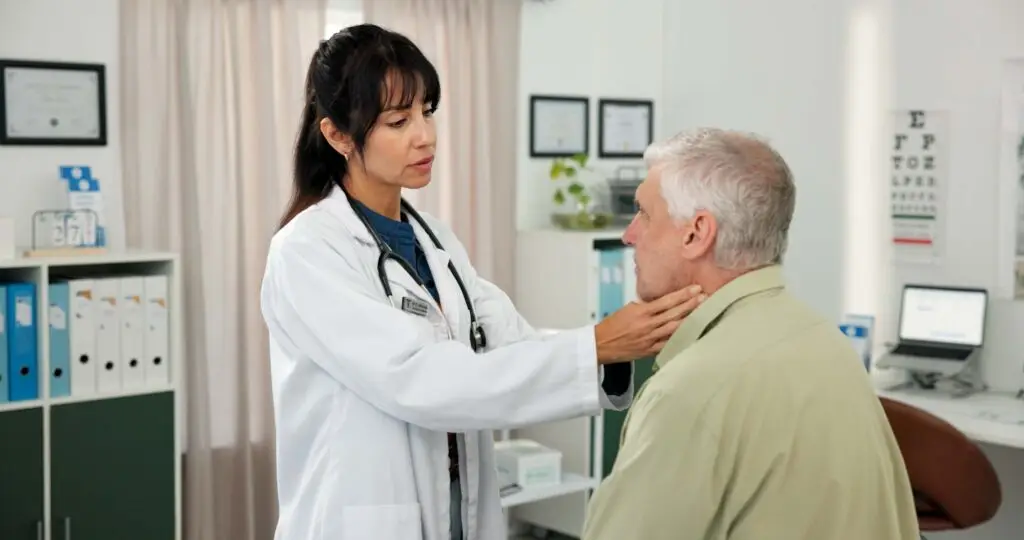
The lymph nodes play an important role in the immune system. Usually, they’re so small you can’t feel them, but they swell if the body is trying to fend off inflammation or infection.
Swelling can also occur when cancer cells get trapped in a lymph node. If you have lymph nodes that swell to the extent they can be felt with your fingers or are visible through the skin, it could be a sign of cancer, so have it checked out.
8. Unexpected Weight Loss or Weight Gain
Weight fluctuations are a normal part of life, but your weight is still something to keep an eye on. If you lose 10 or more pounds unexpectedly, particularly if it happens quickly, talk with a medical provider.
Unusual weight changes, including weight loss or weight gain, can be a sign of cancer in many parts of the body. Endocrine cancers, for example, can cause weight gain, while esophageal, pancreatic and lung cancers can cause unexpected weight loss.
9. Unusual Vaginal Bleeding or Discharge
While it’s often normal for women to have vaginal discharge and bleeding, it’s important to know what’s normal for you and what’s not. If you experience something out of the norm, let a medical provider know.
Vaginal bleeding between periods, bleeding after intercourse, and watery or foul-smelling vaginal discharge can all be signs of gynecologic cancers such as cervical cancer or uterine cancer. Any bleeding after menopause is also a cause for concern.
Screen to Protect Your Health
Cancer doesn’t always cause noticeable symptoms. Many cases of cancer lurk under the surface, only causing symptoms when the cancer has grown or spread.
That’s why screenings are recommended for several types of cancer, including breast cancer, colorectal cancer and cervical cancer. General guidelines for cancer screenings are based on your age and sex, so talk with your primary care provider about which screenings you need and when.
Depending on your risk factors, your provider may also recommend having regular skin cancer screenings or a lung cancer screening.