
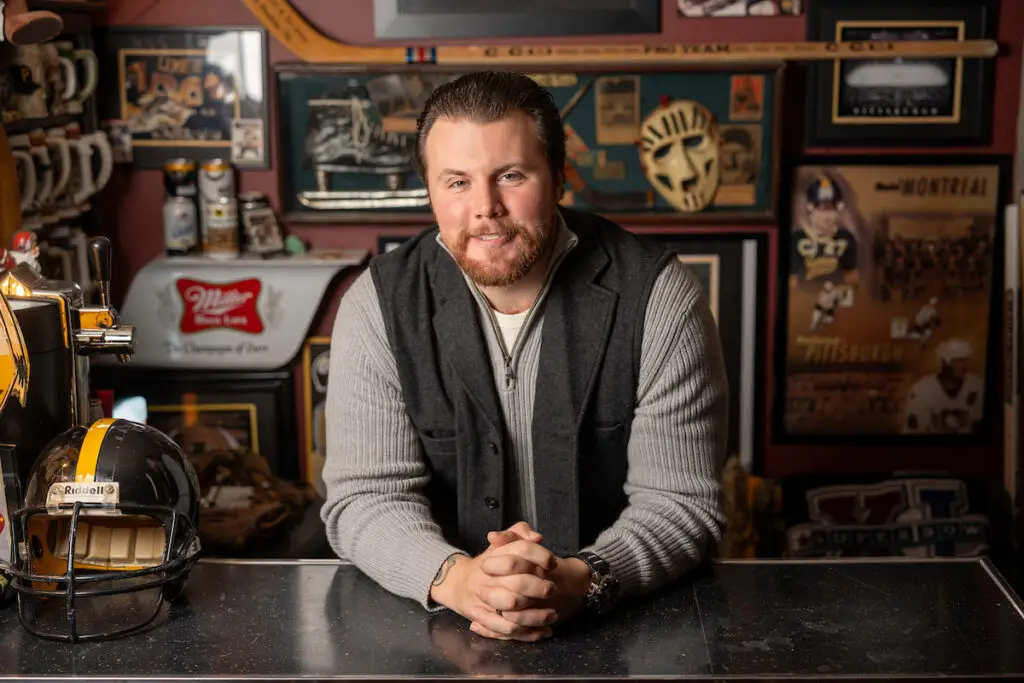
It was a normal day. The sun was shining, and Dominic Norris, aka Dom, wanted to make the most of it. So, he put on his swimsuit, headed outside and dove into the pool. He’s done it countless times before, but this time, something went very wrong.
“The impact of the water hit the front of my neck and blew my neck out backwards,” said the former hockey, lacrosse, and track and field NCAA athlete and middle school teacher. “I immediately started to drown.”
Thankfully, Dom wasn’t alone. His younger sister was in the backyard. She noticed her brother struggling, so she jumped into the pool, got his head above water and dragged him to the pool’s edge. There, the pair fought to keep Dom’s head above water as she called 911.
Airlifted and Evaluated
Dom needed specialty care, fast. EMS airlifted him to America’s only integrated trauma hospital: R Adams Cowley Shock Trauma Center at University of Maryland Medical Center. Established in 1973, the facility features a multidisciplinary team that focuses exclusively on caring for the most severe, life-threatening injuries.
All day, every day, the Shock Trauma Center team cares for people who have experienced traumatic events — heart attacks and falls, automobile accidents and gunshot wounds. Every person who comes through the doors requires immediate care, and the team consistently meets the challenge, boasting a 97% survival rate, a mind-boggling statistic considering nearly every patient is at imminent risk for death.
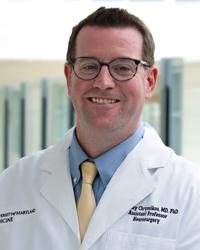
Inside the Shock Trauma Center, Dom underwent examination immediately. The situation was dire, according to Timothy Chryssikos, MD, PhD, neurosurgeon at UMMC and assistant professor of neurosurgery at the University of Maryland School of Medicine.
“Dom had fractured one of the vertebrae in his neck,” Dr. Chryssikos said, “resulting in a complete spinal cord injury. He was not able to move muscle groups or to feel sensation below that injury.”
The burst fracture in Dom’s C7 vertebra meant the lowest bone in his neck was shattered. Any hope of recovery rested on quick, expert care.
A Surgical Start
Surgery was necessary, and there was no time to wait. Without immediate action, Dom would likely remain paralyzed the remainder of his life.
“What’s most amazing, thanks to our system that we have in place, is that we were able to get Dom into the operating room within six hours of his injury,” Dr. Chryssikos said, “which is really pretty incredible timing.”
Dom’s injury compressed and destabilized his spinal cord. To correct the problem, Dr. Chryssikos made an incision in the front of Dom’s neck. Through this opening, Dr. Chryssikos removed the damaged vertebral section. He then placed an implant, a plate and screws to stabilize Dom’s spine. This took the pressure off Dom’s spinal cord, allowing it to heal.
After eight hours, the surgical team wheeled Dom out of the operating room and into the intensive care unit (ICU). He spent 10 days there, recovering from surgery and coming to terms with his new reality. Then, he left the ICU and went to a patient room.
Just before he was discharged for rehab, Dom got the glimmer of hope he needed.
“My right arm started to move a little bit,” he said. “Then on my last day here, I felt a twitch in my left quad.”
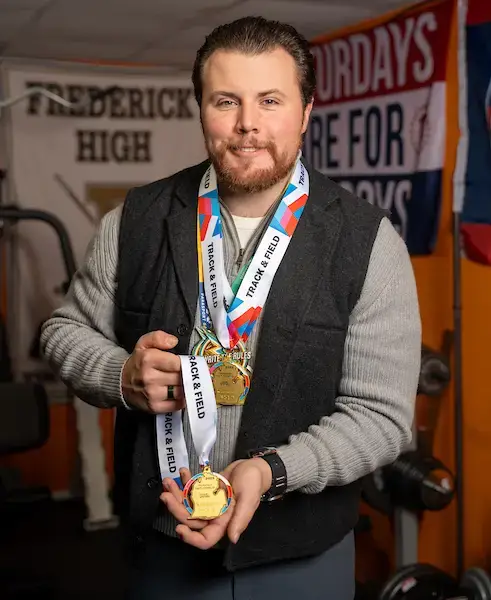
“What they were able to do is mind-blowing. I absolutely think that where I am today is because of the surgical team I had.” — Dominic “Dom” Norris, who received care at University of Maryland Medical Center
Sprinting Toward His Goals
Those tiny movements were enough to fuel his rehabilitation. While he couldn’t will any other part of his body to move, the quad twitch and arm movement encouraged Dom to push himself relentlessly. About two months after his accident, Dom took his first three steps.
Over the next year, he made significant strides in his recovery, aided by his mother, siblings and former coaches. Every time he came in for a follow-up visit, he left the surgical team in awe. “Dom has recovered over 90% of the strength he had pre-accident,” Dr. Chryssikos said. “He was up against a tremendous problem, but through every component of his care, from the EMS team recognizing the injury to our trauma surgery colleagues stabilizing him and our nursing staff and ICU teams, everyone provided really important, critical care.”
Since the accident, Dom has returned to work. He began jogging and running again. A year after the accident, he even got back on the ice. Now, he’s pushing toward new goals. He hopes to participate in the upcoming Paralympics, finish his master’s degree and return to teaching middle school. All this thanks to the timely care Dom received at UMMC.
“The medical team was amazing,” Dom said. “They had my best interest at heart, and they’ve given me a second chance at a new life, a new opportunity to do something with purpose.”
If You Witness a Spinal Injury
If you suspect someone has experienced a spinal cord injury, take these steps.
- Avoid movement. Prevent the injured person from walking, moving or changing positions. Manually hold the person’s head and neck in place, keeping both exactly as you found them.
- Be aware. If there is a risk that the injured person may suffer further injury from fire, electric shock or other hazards, move them to a safe location. Otherwise, keep the person still.
- Call 911. Spinal injury requires immediate, expert medical attention. As an academic medical system, University of Maryland Medical System has access to all services needed to manage damaged spinal cords