
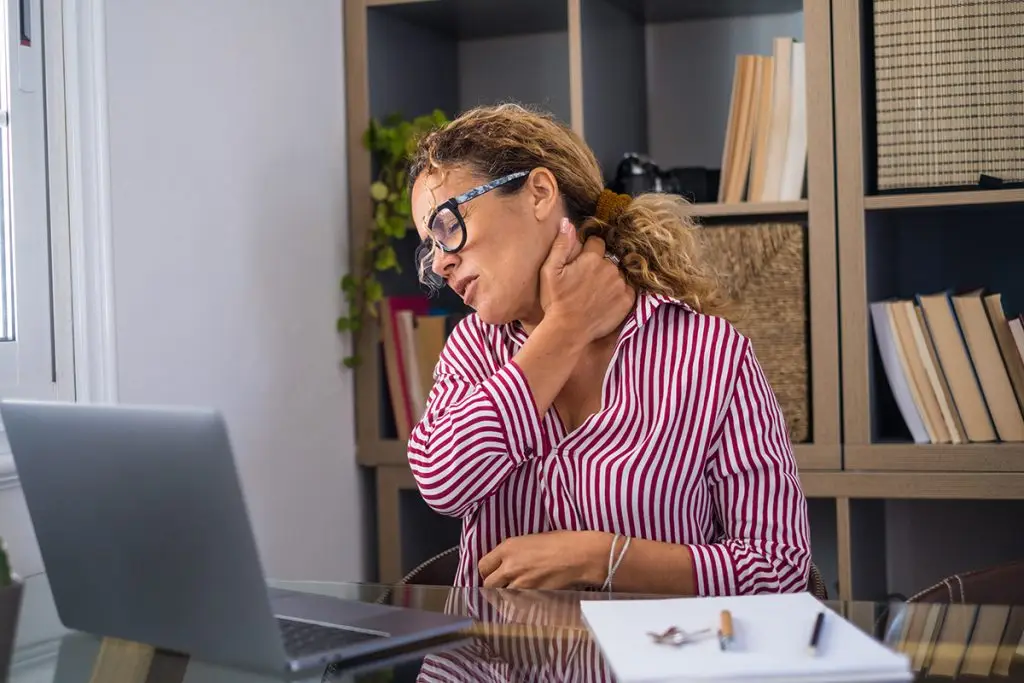
“Cervical radiculopathy” is a bit of a mouthful. In simpler terms, this condition refers to a pinched or irritated nerve in the neck. It may cause symptoms such as pain, numbness, tingling or weakness that radiates into the arm or hand.
If you’re experiencing such symptoms, relief is available.
What Causes a Pinched Nerve?
Each nerve in the neck is wired to a specific region in the arm and hand. When this wiring experiences some sort of trauma, symptoms result. Trauma could be incidental, such as bending down and twisting “wrong.” Or, a major trauma such as a vehicle collision. In very rare cases, an infection or tumor in the spine may cause pinched nerves.
But you don’t need to have trauma to cause a pinched nerve. It can also occur as a result of aging, time, genetics, wear and tear, and other degenerative conditions that accompany age.
Prevention Measures
One way to prevent a pinched nerve is to optimize your workstation. Individuals who work at a computer all day are one group at heightened risk. Thankfully, the field of ergonomics has grown, so there are many options available to customize your work area to prevent injury. Additionally, simply getting up, moving, and stretching regularly can make a significant difference.
Aside from that, neurological experts recommend quitting smoking. Nicotine and smoke can destroy spinal disc spaces and make them more prone to degradation. Individuals may also benefit from a regular exercise regimen.
Treatment Options
The good news is that people who experience a pinched nerve rarely need surgery. The go-to treatments are physical therapy, anti-inflammatory medications, and steroids.
Yet, individuals who have lasting, severe, progressive, and intolerable pain may be candidates for surgery. Oftentimes, these patients experience loss of function in their arm or hand. A common surgery is cervical foraminotomy. This involves making more room for the pinched nerve. Another procedure that may help is an anterior cervical discectomy and fusion if the disc is the cause of the problem. Ultimately, disc replacement proves to be a better option than traditional fusion procedures because it preserves spinal motion.
All procedures are minimally invasive. This allows for faster recovery, less pain, an excellent return of nerve function and a quicker return to work and doing the things you love.
If you’re living with pinched nerve symptoms, consult with your physician. From there, they can recommend further steps.
Listen to a Podcast
Relieving Cervical Radiculopathy: Treatments for a Pinched Nerve
Do you have a feeling of “pins and needles” in your hands or fingers with weakness and/or a loss of sensation in your arm, shoulder or hand muscles? You may have Cervical Radiculopathy, better known as a pinched nerve. In this podcast, spine expert Dr. Steven Ludwig addresses the causes, treatments (both surgical and non-surgical) and ways to prevent getting a pinched nerve.
More to Read
- Is Your Home Office Making Your Carpal Tunnel Syndrome Worse?
- Exercise Snacks & Other Ways to Counteract Too Much Sitting
- Video Game Injuries: Virtual Fun with Real-Life Consequences
- How to Prevent Back Pain and Injuries
- How Technology, Robotics and AI Are Revolutionizing Spine Surgery
- Minimally Invasive Surgery for Back Pain
- Managing Pain with Physical Therapy
- Finding Relief from Neck Pain
- Addressing Spinal Pain with Acupuncture
Medical contributions and review by Steven Ludwig, MD.