
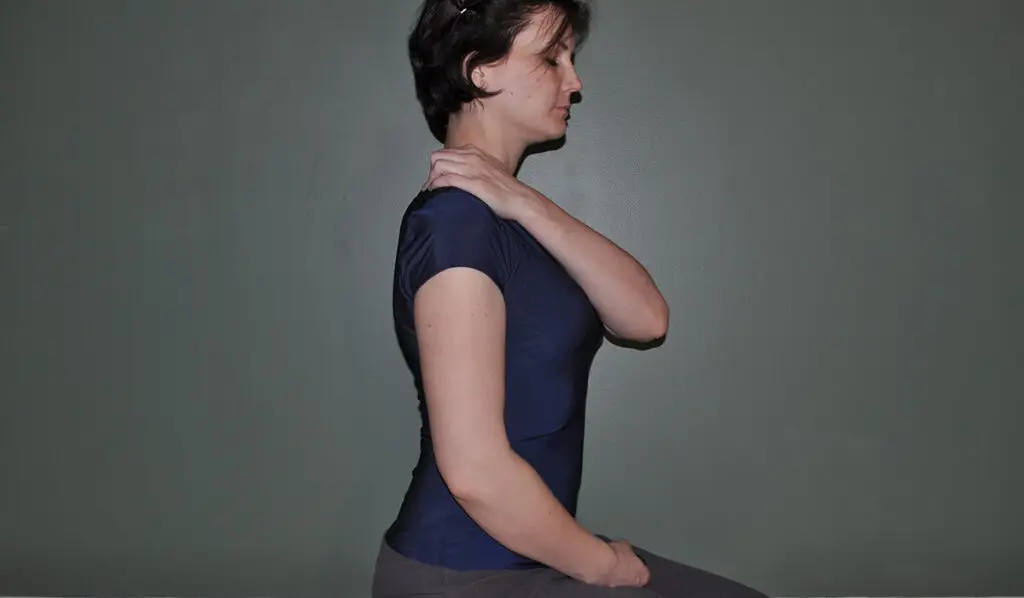
Massage therapists often use a combination of stretches, rubbing, pressing and other techniques to relax muscles. Here are some of those same massage techniques you can do on yourself.
Self-Massage Techniques: A Guide to Getting Started
When performing self-massage, remember these general guidelines to ensure a beneficial and comfortable experience:
- Use the right tools and techniques. Use your fingertips, thumbs, a closed fist, an elbow or a tennis ball. Apply gentle pressure directly to knots or use small, kneading strokes. You can rub around, along or across muscle fibers.
- Opt for pressure, not pain. Aim for a pressure level of 5 to 7 on a scale of 1 to 10. Always err on the side of gentleness. The pressure should feel clear, strong and satisfying but never painful.
- Listen to your body. Trust your instincts and do what feels good and provides relief.
Get started with some of these self-massage techniques.
The ‘Brick Back’ Breaker
If you spend a lot of time hunched over a desk, you’re probably familiar with that stiff, “brick back” feeling. These simple moves can help release tension in your upper back and shoulders.

Shoulder knead: Reach one hand across your body to the opposite shoulder. Using your fingers and palm, squeeze and knead the muscles. If it feels good, you can even massage up into your neck.
Cat stretch: Round your back and reach both arms across your body, similar to the “cat” pose in yoga. Feel a stretch in your upper back and continue to knead with your fingertips.
Cow stretch: Reverse the previous posture by rolling your shoulders back and pushing your chest forward. Extend your arms with palms facing out, like the “cow” pose in yoga.
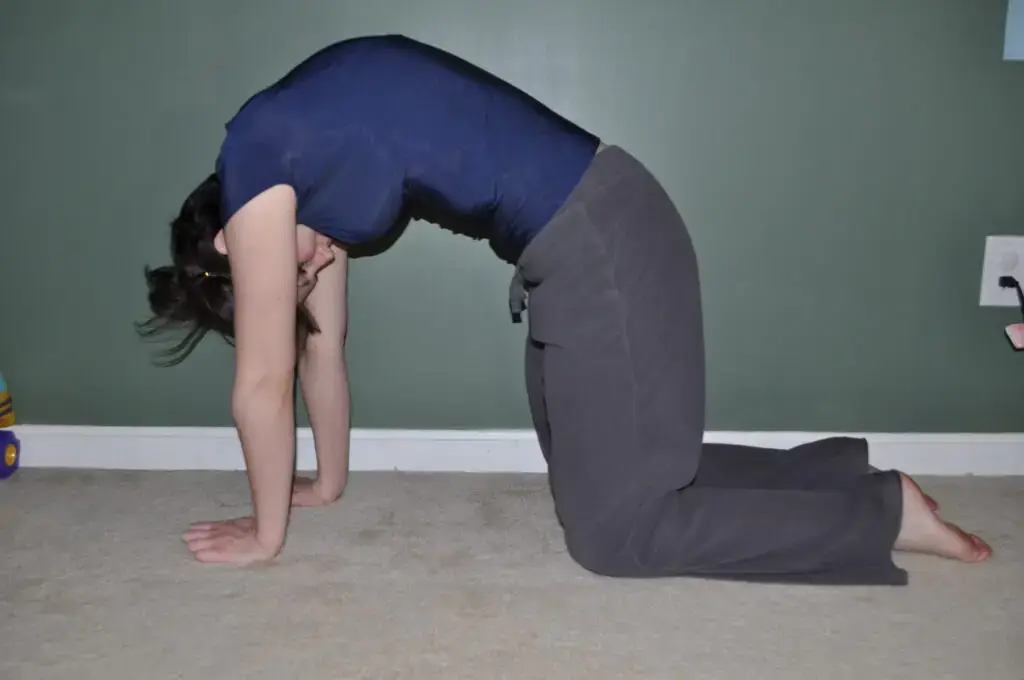
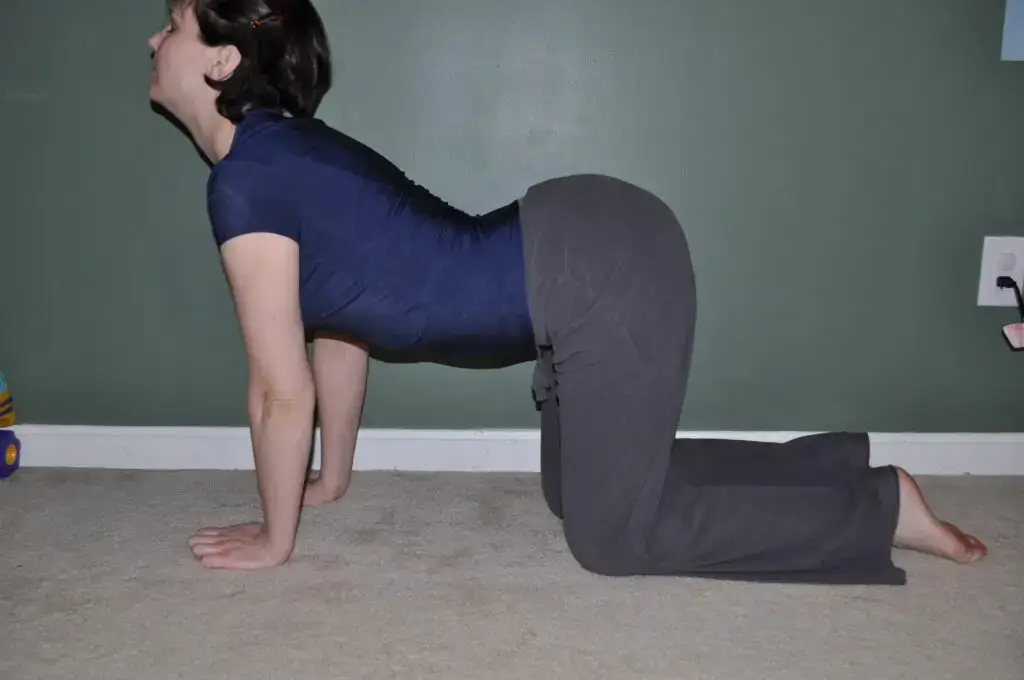
For this next part, you’re going to switch it up and stretch your pectoral muscles in your chest. Stretching these muscles can help fix rounded shoulders, which can improve your posture and prevent back and neck pain.

Chest release: After stretching your chest, firmly stroke from your sternum to your shoulder several times on both sides.

Shoulder opener: Grasp your hands behind your back and further stretch your chest.
Tools for Taming Tension
For an even more effective self-massage, use tools such as a tennis ball, lacrosse ball or pressure point cane (which can be purchased online). NOTE: When using a tool, avoid rolling it directly over your spine. Instead, move it with your hand from one side to the other.
Try any of these three options for a back massage using a tennis ball:
Option 1: Against a Wall
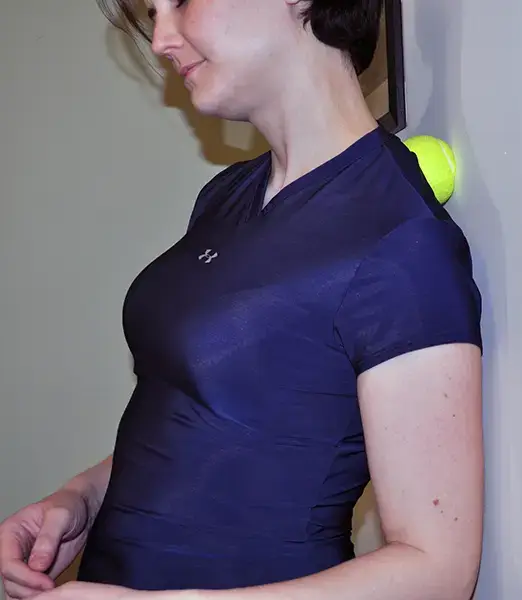
Place the ball between your sore muscles and a wall. Lean in to apply light pressure, and gently roll the ball around. It should feel satisfying but never painful.
Option 2: In a Chair
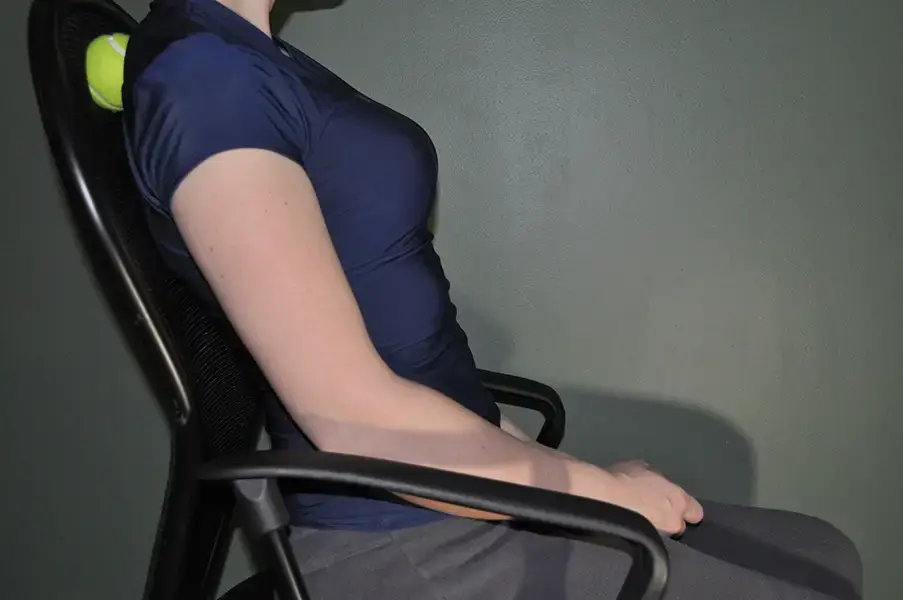
Use a chair with a firm back—avoid using a sofa or any other soft surface, as it won’t provide enough resistance. Position the tennis ball between your sore muscles and the chair. Press into the ball, bounce slightly and roll it around. This should also feel satisfying and pain-free.
Option 3: On the Floor (Most Intense)
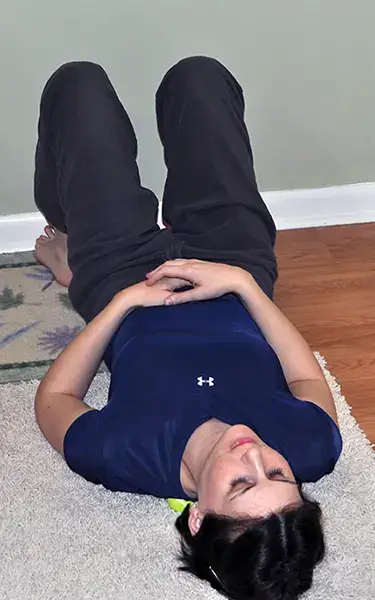
Note: This option is not recommended if you have difficulty getting on and off the floor. It offers the deepest pressure with the least control.
Place the ball between your sore muscles and the floor. Carpet is ideal as it provides traction and prevents the ball from rolling away. Press in and roll the ball around. Remember, it should always be satisfying and never painful.
Key Takeaways
Back pain can disrupt your day, but with the right self-massage techniques, you can find quick and effective relief right at home. By combining stretches, targeted pressure and the right tools, you can relax tense muscles, ease discomfort and feel more in control of your body.
Get a Free Self-Massage Guide
Do you experience tension-related body pain? Download this free guide for tips on self-massage strategies that can help relieve pain throughout your body.