
Medically Reviewed by Daniel Gelb, MD.
No parent wants to learn their child has a serious medical condition. Back pain in kids can be especially frightening. Fortunately, not every spinal issue is severe. In fact, most spinal conditions are not dangerous and don’t have major health implications.
The three primary causes of spinal disorders in children are non-specific back pain, scoliosis and spondylolisthesis.
Non-Specific Back Pain
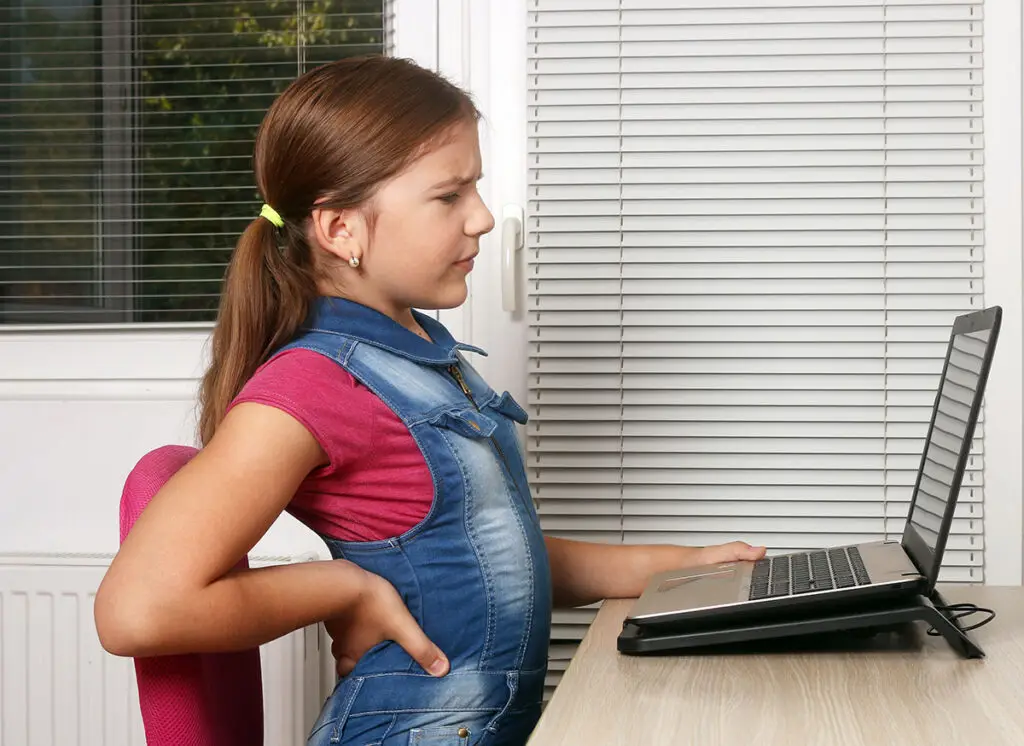
The most prevalent pediatric spine disorder is general back pain. Just like adults, it can be caused by many reasons, but most of the time is not serious. Sometimes, pain relates to a mechanical issue like posture, physical activity or obesity.
It’s notable that pediatric back pain increased during the pandemic. This is likely due to kids getting less physical activity than they used to. It is important to encourage your children to be active, get outside and move more. In fact, obesity is a cause of back pain, so it is even more important for children to exercise regularly and stay fit. Reducing time spent playing video games and increasing physical activity can significantly reduce the risk of back pain in children.
For non-specific back pain, Tylenol or Advil may provide relief. Physical therapy is another option. But most of the time, consistent movement and exercise will help alleviate the pain.
Scoliosis
Scoliosis, a lateral curvature of the spine, is common in growing children and tends to run in families. If the condition goes untreated, it can cause pain as an adult or even serious complications down the road.
With mild scoliosis, regular X-rays and observation are often enough. However, if the curvature increases and the child has more growth ahead, orthopedic experts recommend using a brace. A brace is effective in controlling curve growth. In severe cases, surgery may be indicated, but that is very rare.
Unfortunately, children won’t grow out of scoliosis. Once a curve has formed, it will remain a curve. A brace will help prevent it from getting larger, but won’t straighten it. However, small curves are not necessarily symptomatic, and most adults tolerate some degree of curvature without any long-term problems.
Spondylolisthesis
Spondylolisthesis is a stress fracture that occurs at the base of the spine. If an athlete reports severe or persistent back pain, they should be evaluated for spondylolisthesis.
If this is the confirmed diagnosis, the first course of treatment is to remove the child or teen from athletic activities. To help the spine rest, a brace is often used to immobilize it and allow it to heal. If it becomes severe, surgery may be required, but that is rare.
Spondylolisthesis can cause chronic recurrent back pain if the fracture fails to heal and can cause nerve compression. Nerve compression can cause sciatica, a shooting pain down the legs. People don’t usually grow out of that, but they generally aren’t terribly symptomatic for most people.
What Parents Can Do for Back Pain in Kids
First of all, parents should keep in mind that the vast majority of back pain in kids is not dangerous. Their child can be treated successfully, and almost always without surgery. And most of the time kids will go on to live a very successful, happy life without any major concerns regarding their back. However, if the parents are concerned, they should have their child evaluated by a spine expert.
Back pain that lasts a day or two, in general, is nothing to be concerned about. It is a common occurrence for both children and adults.
It is important to have the child evaluated if:
- The pain is persistent
- The pain is severe
- The pain is interfering with sleep
- The child is giving up fun activities, like going to parties or the movies (this does not include too much pain to take out the trash or do the dishes)
The best thing parents can do is encourage their kids to get up and get moving and see a spine expert if they have any concerns.